Posts

SQLBITS session summary: How to start BLOGGING

Image
Attending conferences is a lot of fun.  Networking with smart people during the conferences is a lot of fun and learning. Attending conference sessions is a lot of learning and fun for the first 10 min until the mischievous phone flashes and pulls your attention. Twitter notifications, work emails and kids in WhatsApp behave like they have agreed to pull your attention from the session. The moment that I open the sneaky device - I completely lose focus and attention.  I have found a way that keeps me actively engaged during the session, I write a colourful summary of things being said. It's a very intensive and exhausting process but I like the result that I can share with you and I succeed in keeping my focus sharp. Here is my summary from Steve Jones session at SqlBits on How to start blogging.
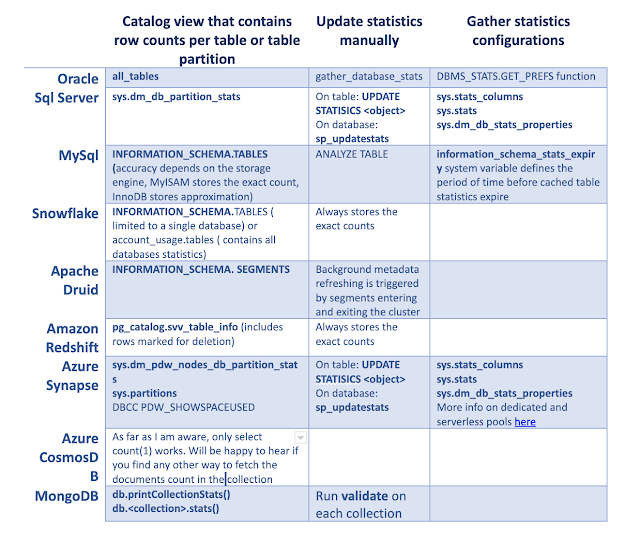
Doing things right or do right things? How to find row count of every table in database efficiently.

Image
One Data Engineer had to replicate data from one well-known database vendor to a less-known database vendor. He used select count(*) to validate that tables row counts were equal on the source and target. It worked so slowly, that he got fired without ever knowing whether the table's content was equal or not. Often laziness is a first step towards efficiency. Rather than doing count(*) on each table, the unfortunate DBA could have used internal statistics that every decent database vendor is maintaining, stored in the system views. Need to take into consideration that it will never be 100% accurate and will depend on a few things How often do database objects change What is the internal or manual schedule for statistics refresh. For a lot of database vendors, statistics will get refreshed automatically only when the changed data is more than 10% of the total table rows but this is usually configurable per table. The percentage of rows used to calculate the statistics. The most accu...

What is Data Governance?

Image
"What is Data Governance?", a curious kid asks, peeking above my shoulder into the laptop screen. He is 14 and frequently asks questions with no interest in knowing the answer. Just like many other people around me. "That's a great question", - the first thing you would say when you have no good strategy for how to approach the question. The second part is to think aloud. After a few minutes of gathering my thoughts: "consider the term "data" as a  synonym of "useful information". We use the information to support decision-making and choosing strategy.   Regardless of whether we are talking about a household or business, having a proper strategy ensures efficient business management and somewhat helps to forecast the future. Data Governance is a system that controls every aspect of the data lifecycle - the series of stages the data goes through, from being captured, stored and used, to data asset destruction. This system helps to ensure ...

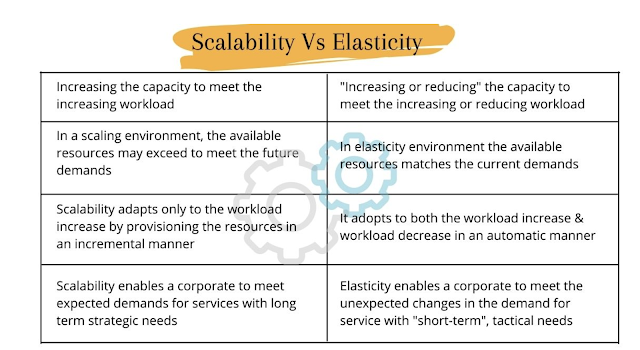
Cloud Scalability vs Cloud Elasticity

Image

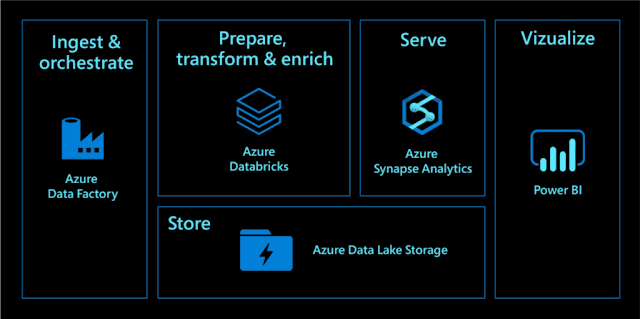
Modern Modular Data Pipelines Example

Image
  I would like to share with you my favourite example of the modern data pipeline. It's amazing. The first cool thing  that we see is that this great pipeline is utilizing a full range of cloud services built for diverse use cases. Choosing the correct tool for each use case can be one of the key factors for the success of your idea, allowing you to get things running as fast as possible without reinventing the wheel. Another cool thing is if we want to pull data from any non-trivial data source, like Twitter or Jira or GitHub, Azure Databricks is our first friend. However, t he most noticeable advantage  of this pipeline, is that instead of having a monolithic data flow, this pipeline is actually multiple pipelines that are running in parallel. Short, simple, and independent pipelines. Multiple independent pipelines can work in parallel and on different frequencies. One pipeline failure would not impact others. This is an easy way to scale each pipeline separately to spe...

When should you use Azure Databricks?

Image
  Once upon a time, Sql Server was our central tool for data management, for both OLTP (online transactions processing) or OLAP(online analytical processing) database systems. We have used Sql Server Agent Jobs to pull the data from FTP or any other source. We have used Sql Server stored procedures to pull the data into the Staging database. We have used Sql Server stored procedures to enrich and aggregate the data. And we have used Sql Server as a data serving layer.  These days we need to consider utilizing various cloud services. A ttempts to lift and shift existing systems into the cloud often end up being quite expensive if we tend to keep Sql Server taking care of all data pipeline stages.  There are multiple great services in the Azure cloud and Microsoft tends to build each product with multiple features allowing it to take care of multiple pipeline stages. This does not mean that we need to go back to the monolith architecture, let's find out where each service f...

Over time you learn more things and do better (DATA TLV puzzles and excitement)

Image
         I took the first sip from my morning coffee when the last summit session had started, somewhere around 15:00. I heavily sank to a sofa and realized that this is the first time I had a chance to sit down today. Another organizer was sitting nearby with the exact "stick a fork in me, I am done" look, staring nowhere. "Oh, I am so tired" - that was my 18-year-old nephew Sonya anchored on the other side of the sofa. She had helped us with registrations and timekeeping in classes and has absorbed all speakers' disappointment with outdated presentation equipment. "Most speakers finish before their time", she said with an exhausted look. "Very smart and intelligent people. I didn't understand anything they talked about." I wish we knew how to make sure the summit meets everyone's expectations. Every sponsor wants to deliver a session. The more sponsored sessions mean fewer slots for community speakers sessions. The toughest part of ...